Table of Contents
ToggleA New Era of Women’s Health
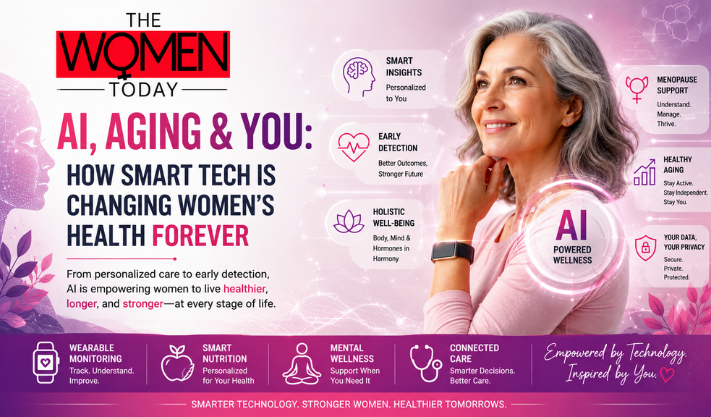
For generations, women’s health concerns were often underrepresented in medical research, leaving many women to navigate complex health challenges with limited personalized guidance. Today, artificial intelligence (AI) is helping to change that reality. From wearable devices that monitor vital signs to advanced algorithms that predict health risks, smart technology is reshaping how women understand, manage, and improve their well-being. As women live longer and seek healthier, more active lifestyles, AI-powered health solutions are becoming essential tools in supporting wellness throughout every stage of life. The combination of aging populations, growing health awareness, and rapid technological innovation has created a healthcare revolution that is transforming women’s lives in unprecedented ways.
The Rise of Personalized Health Monitoring
One of the most significant contributions of AI to women’s health is personalized monitoring. Traditional healthcare often relies on periodic checkups, which provide only snapshots of a person’s health. Smart devices, however, collect continuous data that can reveal patterns and changes over time. Wearable fitness trackers, smartwatches, and health apps can monitor heart rate, sleep quality, physical activity, stress levels, and even menstrual cycles.
AI analyzes this information to deliver personalized insights tailored to each woman’s unique health profile. Instead of generic recommendations, women can receive customized guidance on exercise, nutrition, sleep, and stress management. For aging women, this level of personalization is particularly valuable because health needs evolve significantly over time. Early detection of changes in physical or mental well-being allows individuals to take proactive measures before minor issues develop into serious conditions.
Revolutionizing Menopause Management
Menopause has long been one of the most challenging and least understood stages of women’s health. Symptoms such as hot flashes, sleep disturbances, mood swings, fatigue, and hormonal fluctuations can significantly impact quality of life. AI-driven health platforms are now helping women better understand and manage this transition.
By tracking symptoms, hormone-related patterns, and lifestyle factors, intelligent systems can identify triggers and suggest effective interventions. Some applications use machine learning to predict symptom severity and recommend personalized strategies for relief. Women can gain deeper insights into how nutrition, exercise, sleep, and stress influence their menopausal experience. This data-driven approach empowers women to make informed decisions and feel more in control during a life stage that was once surrounded by uncertainty and limited support.
Early Detection and Preventive Care
AI is also playing a crucial role in preventive healthcare. Early diagnosis remains one of the most effective ways to improve treatment outcomes for many diseases that disproportionately affect women. Advanced AI systems can analyze medical images, laboratory results, and patient histories with remarkable accuracy.
In breast cancer screening, for example, AI tools can assist radiologists by identifying subtle abnormalities that might otherwise go unnoticed. Similar technologies are being applied to cervical cancer detection, osteoporosis risk assessment, cardiovascular disease screening, and other conditions that become more common with age. By recognizing warning signs earlier, healthcare providers can intervene sooner, potentially saving lives and reducing long-term healthcare costs.
Preventive care is especially important as women age because the risk of chronic diseases increases over time. AI helps shift healthcare from a reactive model focused on treating illness to a proactive model centered on maintaining wellness and preventing disease before it develops.
Supporting Mental Health and Emotional Well-Being
Mental health is an essential component of overall wellness, yet many women struggle to access timely and effective support. AI-powered mental health platforms are helping bridge this gap by offering accessible resources and personalized assistance.
Smart applications can monitor behavioral patterns, sleep quality, mood changes, and stress indicators to identify potential signs of anxiety, depression, or emotional burnout. Some platforms provide guided meditation, cognitive behavioral therapy exercises, mood tracking, and virtual coaching. These tools offer convenient support that can complement traditional mental healthcare services.
For aging women facing life transitions such as retirement, caregiving responsibilities, empty nest syndrome, or menopause-related emotional changes, AI-driven mental health support can provide valuable guidance. While technology cannot replace human connection or professional care, it can serve as an accessible first line of support and encourage individuals to seek help when needed.
Improving Reproductive and Hormonal Health
Women’s reproductive health is another area experiencing major technological advancement. AI-powered fertility tracking systems analyze cycle data, hormone levels, body temperature, and other indicators to help women better understand their reproductive health. These tools support family planning decisions while also identifying irregular patterns that may signal underlying medical conditions.
Beyond fertility, AI is helping researchers uncover deeper insights into hormonal health. Conditions such as polycystic ovary syndrome (PCOS), endometriosis, and thyroid disorders often take years to diagnose. Intelligent systems can analyze symptoms and medical records to identify patterns that may lead to faster diagnoses and more effective treatment plans.
As women age, hormonal fluctuations continue to influence metabolism, bone density, cardiovascular health, and cognitive function. AI enables more precise monitoring of these changes, allowing healthcare providers to deliver personalized care that adapts to each stage of life.
Smart Technology and Healthy Aging
Healthy aging is about more than simply extending lifespan; it is about maintaining independence, vitality, and quality of life. AI-powered technologies are helping women achieve these goals through innovative solutions that support physical and cognitive health.
Smart home devices can monitor daily activities and identify potential safety risks. Wearable sensors can detect falls and alert caregivers or emergency services. AI-driven fitness programs adapt workouts based on individual capabilities and health conditions. Nutrition platforms provide customized dietary recommendations that evolve with changing health needs.
Cognitive health is another important focus. AI applications designed for brain training, memory support, and cognitive assessment can help individuals stay mentally engaged and monitor changes that may require medical attention. These technologies enable women to take an active role in preserving their health and independence as they age.
The Power of Data and Predictive Insights
Perhaps the most transformative aspect of AI is its ability to turn vast amounts of health data into meaningful predictions. By analyzing information from millions of users, AI systems can identify trends, risk factors, and health patterns that were previously difficult to detect.
Predictive analytics can estimate the likelihood of developing certain conditions, allowing women and healthcare providers to take preventive action. For example, AI may identify early indicators of diabetes, heart disease, osteoporosis, or cognitive decline years before symptoms become noticeable. This shift toward predictive healthcare represents a fundamental change in how medicine is practiced.
Instead of waiting for illness to appear, women can use AI-powered insights to make lifestyle adjustments that reduce risk and promote long-term wellness. The result is a more personalized, proactive, and empowering healthcare experience.
Challenges and Ethical Considerations
Despite its enormous potential, AI in healthcare is not without challenges. Privacy and data security remain major concerns, as health information is among the most sensitive personal data individuals possess. Ensuring transparency, ethical data usage, and robust cybersecurity protections is essential.
There is also a need to ensure that AI systems are trained on diverse populations so that recommendations are accurate and inclusive for women of different ages, ethnicities, and health backgrounds. Technology should enhance healthcare access rather than create new disparities.
Healthcare professionals, technology developers, policymakers, and patients must work together to ensure that innovation remains responsible, equitable, and patient-centered.
The Future Is Personal, Predictive, and Empowering
The intersection of AI, aging, and women’s health marks one of the most exciting developments in modern healthcare. Smart technology is enabling women to understand their bodies more deeply, detect health issues earlier, manage life transitions more effectively, and make informed decisions about their well-being. From personalized wellness plans and menopause management to preventive screening and healthy aging support, AI is redefining what healthcare can achieve. As technology continues to evolve, women will gain even greater access to tools that promote longevity, independence, and quality of life. The future of women’s health is becoming increasingly personal, predictive, and empowering—and AI is leading the way.
Also Read:-
Stop Waiting to Be Ready: Career Advice for Women
She Had Nothing But a Plan Comeback Stories Inspire
Budget Beauty Dupes for Luxury Skincare Results