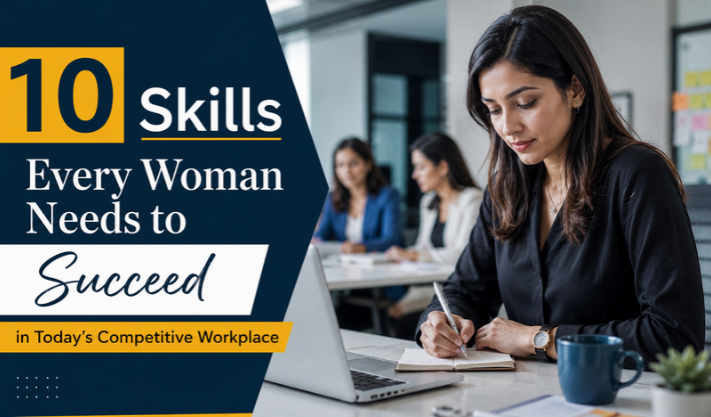
The modern workplace is changing faster than ever. Technology, remote work, artificial intelligence, global competition, and evolving workplace expectations have transformed what it takes to build a successful career. For women, professional success is no longer only about technical qualifications or years of experience. It also requires confidence, adaptability, communication, leadership, and the ability to continuously learn.
So, what skills can help women succeed in today’s competitive workplace? Here are 10 essential skills that can strengthen career growth, improve professional confidence, and create new leadership opportunities.
What Are the Most Important Skills for Women in the Workplace?
The most valuable skills combine professional expertise with human capabilities. Communication, emotional intelligence, adaptability, leadership, negotiation, digital literacy, networking, problem-solving, financial awareness, and continuous learning can help women navigate challenges and take advantage of new opportunities.
1. Why Is Effective Communication Important for Women?
Effective communication is one of the most important workplace skills. Women need to communicate ideas clearly, confidently, and professionally across meetings, emails, presentations, negotiations, and everyday conversations.
Strong communication is not simply about speaking more. It is about making your message clear, listening actively, asking useful questions, and adapting your communication style to different audiences.
Women can strengthen this skill by practicing concise explanations, becoming comfortable speaking in meetings, and learning how to communicate achievements without minimizing them.
Key takeaway: Clear communication helps professionals build credibility, influence decisions, and establish stronger workplace relationships.
2. How Does Emotional Intelligence Support Career Success?
Emotional intelligence, often called EQ, is the ability to understand and manage your own emotions while recognizing the emotions of others.
In a professional environment, high emotional intelligence can help women handle workplace pressure, manage disagreements, respond thoughtfully to criticism, and build productive relationships.
Emotional intelligence also supports leadership because successful leaders need to understand what motivates their teams and recognize when employees need guidance, encouragement, or support.
Key takeaway: Emotional intelligence helps women manage workplace relationships with confidence, empathy, and professionalism.
3. Why Is Adaptability Essential in Today’s Workplace?
Workplaces are constantly evolving. New technologies, changing customer expectations, restructuring, remote collaboration, and artificial intelligence mean that yesterday’s methods may not always work tomorrow.
Adaptability allows women to respond positively to change instead of becoming overwhelmed by it. Being open to new responsibilities, technologies, processes, and working styles can make a professional more valuable to an organization.
Adaptability does not mean accepting every change without question. It means being willing to learn, evaluate new situations, and adjust when necessary.
Key takeaway: Adaptable professionals are better prepared for changing roles, industries, and workplace expectations.
4. How Can Leadership Skills Help Women Advance Their Careers?
Leadership is not limited to people with executive titles. A woman can demonstrate leadership by taking initiative, solving problems, supporting colleagues, managing projects, and making responsible decisions.
Strong leadership involves accountability, strategic thinking, delegation, decision-making, and the ability to inspire others.
Women who want to move into management or executive positions should look for opportunities to lead projects and demonstrate measurable results.
Key takeaway: Leadership begins with ownership and influence, not a job title.
5. Why Is Negotiation an Important Skill for Women?
Negotiation is useful in many areas of professional life, including salary discussions, promotions, project responsibilities, deadlines, contracts, and workplace resources.
Effective negotiation starts with preparation. Professionals should understand their value, gather relevant evidence, define their goals, and communicate their expectations clearly.
Instead of viewing negotiation as confrontation, women can approach it as a professional conversation designed to create a fair and mutually beneficial outcome.
Key takeaway: Strong negotiation skills can help women advocate for their value and make more informed career decisions.
6. How Important Is Digital Literacy for Career Growth?
Digital literacy has become a fundamental workplace skill. Professionals across industries increasingly need to understand digital communication, data, collaboration platforms, cybersecurity basics, automation, and AI-powered tools.
Women do not necessarily need to become technology specialists. However, understanding how technology affects their industry can create a significant professional advantage.
Learning new digital tools can also improve productivity and demonstrate a willingness to evolve with the workplace.
Key takeaway: Digital confidence helps women remain competitive as technology transforms different professions.
7. How Can Networking Create New Career Opportunities?
Networking is more than collecting contacts. It is about developing genuine professional relationships with people who can share knowledge, provide mentorship, collaborate on projects, or introduce new opportunities.
Women can build professional networks through industry events, professional communities, conferences, online platforms, mentorship programs, and workplace relationships.
The strongest networks are built through mutual value. Offering support and sharing knowledge can be just as important as asking for help.
Key takeaway: A strong professional network can provide access to knowledge, mentorship, collaboration, and career opportunities.
8. Why Is Problem-Solving a Critical Workplace Skill?
Employers value professionals who can identify problems and develop practical solutions. Problem-solving requires analytical thinking, creativity, research, decision-making, and the ability to evaluate possible outcomes.
Women can demonstrate this skill by focusing not only on identifying workplace challenges but also on proposing realistic solutions.
A useful approach is to define the problem, identify its root cause, consider possible solutions, evaluate risks, and take measurable action.
Key takeaway: Professionals who solve problems effectively can become trusted contributors and future leaders.
9. Why Should Women Develop Financial Awareness?
Financial awareness is valuable even for professionals who do not work in finance. Understanding budgets, compensation, business performance, revenue, expenses, investments, and basic financial terminology can improve workplace decision-making.
For women pursuing leadership positions or entrepreneurship, financial literacy becomes even more important because business leaders regularly make decisions involving resources and financial priorities.
Understanding your own compensation and financial goals is equally important for long-term career planning.
Key takeaway: Financial knowledge strengthens professional decision-making and supports greater career independence.
10. How Does Continuous Learning Improve Career Success?
Perhaps the most important skill is the ability to keep learning.
Industries change, new technologies emerge, and employers increasingly value professionals who can acquire new knowledge quickly. Continuous learning can include formal education, professional certifications, online courses, books, mentorship, industry events, or hands-on experience.
Women should regularly ask themselves: What skill will be valuable in my industry over the next three to five years?
That question can help turn career development into a proactive strategy rather than a reaction to workplace change.
Key takeaway: Continuous learning keeps skills relevant and creates opportunities for long-term professional growth.
What Is the Best Way for Women to Build These Skills?
Women do not need to master all 10 skills simultaneously. A practical approach is to identify two or three areas that could make the biggest difference in their current careers.
For example, someone preparing for management may prioritize leadership, communication, and negotiation. A professional entering a technology-driven industry might focus on digital literacy, adaptability, and continuous learning.
Small, consistent improvements can produce meaningful results over time.
How Can Women Become More Competitive in the Workplace?
Women can become more competitive by combining technical expertise with strong human skills. Building confidence, communicating achievements, developing professional relationships, understanding business fundamentals, embracing technology, and continuously upgrading skills can create a powerful career foundation.
Success also requires recognizing personal strengths rather than constantly comparing yourself with others. Career growth is not always a straight line. It can involve changing industries, taking on new responsibilities, starting a business, returning to work, or pursuing leadership.
Final Thoughts: Which Skills Matter Most?
The workplace rewards professionals who can combine expertise with adaptability and strong interpersonal skills. For women, developing these 10 skills can provide a practical foundation for career advancement:
- Effective communication
- Emotional intelligence
- Adaptability
- Leadership
- Negotiation
- Digital literacy
- Networking
- Problem-solving
- Financial awareness
- Continuous learning
The goal is not simply to compete in today’s workplace but to prepare for tomorrow’s opportunities. When women invest in their skills, build meaningful professional relationships, and confidently communicate their value, they become better positioned to grow, lead, and create lasting impact.
Also Read:-
How Women Can Overcome Barriers to Growth and Success
5 Powerful Steps to Become a Confident, Independent Woman
How Women Can Build Self-Confidence and Personal Growth