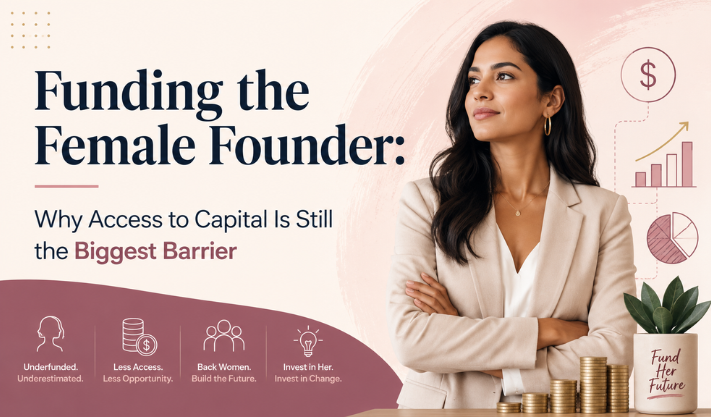
Women entrepreneurs are launching businesses at record rates, creating jobs, driving innovation, and contributing significantly to the global economy. Yet despite their growing presence in the business world, one challenge continues to stand in their way: access to capital.
From startup funding and venture capital investments to bank loans and angel financing, women founders often face hurdles that their male counterparts do not. While progress has been made over the past decade, the funding gap remains one of the biggest obstacles preventing women-led businesses from reaching their full potential.
This article answers some of the most common questions about female founder funding and explores why access to capital remains a critical issue today.
What Is the Funding Gap for Female Founders?
The funding gap refers to the difference in financial support received by businesses founded by women compared to those founded by men.
Research consistently shows that women-owned startups receive a significantly smaller share of venture capital funding. Even though women start businesses at a high rate and often achieve strong business performance, they continue to secure less investment capital than male-led companies.
This gap affects businesses at every stage, from startup launches and early growth to expansion and scaling efforts. Without adequate funding, many promising businesses struggle to hire talent, develop products, expand operations, or compete effectively in the marketplace.
Why Do Female Entrepreneurs Receive Less Funding?
Several factors contribute to this ongoing challenge.
First, investment networks have historically been dominated by men. Venture capital firms, angel investor groups, and financial decision-makers have traditionally invested in founders who resemble previous success stories. This often creates unconscious bias during funding decisions.
Second, women may have less access to influential business networks where funding opportunities are frequently discussed and negotiated. Relationships often play a major role in securing investments.
Third, female founders are sometimes asked different questions during investment meetings. Studies have shown that women are often asked about risks and potential losses, while men are more frequently asked about growth opportunities and future gains. This difference can impact investor perceptions and funding outcomes.
Finally, fewer women occupy leadership positions within investment firms, which can limit representation and understanding of women-led business opportunities.
Does This Mean Women-Led Businesses Are Less Successful?
No. In fact, many studies suggest the opposite.
Numerous women-led businesses demonstrate strong financial performance, efficient use of capital, and sustainable growth. Female entrepreneurs often achieve impressive results despite receiving less funding.
Many investors are beginning to recognize that women-led companies can deliver competitive returns and strong long-term value. However, despite this growing awareness, investment patterns have been slow to change.
Success is not the issue. Access to resources and opportunities remains the primary challenge.
How Does Limited Funding Impact Women-Owned Businesses?
Limited access to capital can affect nearly every aspect of business growth.
Without sufficient funding, founders may struggle to:
- Hire experienced employees
- Invest in technology and innovation
- Expand into new markets
- Increase marketing efforts
- Scale operations efficiently
- Manage cash flow during growth periods
As a result, businesses may grow more slowly than they otherwise could. Some entrepreneurs may even abandon promising ideas because they lack the financial support needed to bring them to market.
The impact extends beyond individual companies. Communities, industries, and economies lose valuable innovation when talented founders cannot access funding.
Are Venture Capital Firms Improving Their Support for Female Founders?
There have been positive developments in recent years.
Many venture capital firms have introduced initiatives focused on increasing investment in women-led startups. Dedicated funds, diversity programs, and female-focused accelerator programs have emerged across the entrepreneurial ecosystem.
Additionally, more women are entering investment roles, helping create broader perspectives within funding organizations.
However, progress remains gradual. Female founders continue to receive only a small percentage of total venture capital investment, indicating that significant work remains to be done.
The conversation around gender equity in funding has grown louder, but meaningful change requires consistent action from investors, institutions, and policymakers.
What Funding Options Are Available for Female Entrepreneurs?
Women entrepreneurs have access to several funding sources.
Common options include:
Venture Capital
Venture capital firms invest in high-growth startups in exchange for equity. This funding is often used to scale rapidly and expand operations.
Angel Investors
Angel investors are individuals who provide early-stage funding to promising businesses. Many angel networks now focus specifically on supporting women founders.
Business Loans
Banks and financial institutions offer loans that can help entrepreneurs launch or grow their businesses. Strong business plans and financial records improve approval chances.
Grants
Some organizations offer grants specifically designed to support women-owned businesses. Unlike loans, grants typically do not require repayment.
Crowdfunding
Crowdfunding platforms allow entrepreneurs to raise money directly from supporters, customers, and communities.
Accelerator Programs
Business accelerators often provide funding, mentorship, networking opportunities, and educational resources to help startups grow.
Using a combination of these funding sources can help entrepreneurs build stronger financial foundations.
Why Is Representation Important in Funding Decisions?
Representation matters because diverse perspectives often lead to better decision-making.
When investment firms include women in leadership and decision-making roles, they may be more likely to recognize opportunities that others overlook. Diverse teams can evaluate businesses from a wider range of viewpoints and experiences.
Greater representation also helps aspiring female founders see that success is attainable. Role models play an important role in inspiring future entrepreneurs and encouraging them to pursue ambitious goals.
Increasing diversity among investors is one step toward creating a more inclusive funding environment.
What Can Female Founders Do to Improve Their Funding Opportunities?
While systemic challenges remain, there are practical steps entrepreneurs can take.
These include:
- Building strong professional networks
- Developing detailed business plans
- Tracking key financial metrics
- Practicing investor pitches regularly
- Seeking mentorship from experienced founders
- Participating in startup accelerators
- Connecting with women-focused investment groups
Preparation and persistence can significantly improve funding outcomes.
Many successful entrepreneurs faced multiple rejections before securing investment. Resilience remains one of the most valuable qualities in the fundraising process.
What Does the Future Look Like for Female Founder Funding?
There is reason for optimism.
Awareness of the funding gap is higher than ever before. Investors, corporations, governments, and advocacy groups are increasingly focused on creating equal opportunities for entrepreneurs.
Technology is also expanding access to capital through crowdfunding, online lending platforms, and digital investment communities. These alternatives can help reduce traditional barriers and connect founders with broader audiences.
As more women build successful companies and enter leadership positions within investment firms, the ecosystem may continue evolving toward greater inclusivity.
However, meaningful progress will require ongoing commitment from all stakeholders involved in entrepreneurship and finance.
Final Thoughts
Access to capital remains one of the biggest barriers facing female founders today. Although women continue to demonstrate innovation, leadership, and business success, many still encounter challenges when seeking funding.
Closing the funding gap is not only a matter of fairness—it is also an economic opportunity. Supporting women entrepreneurs can drive innovation, create jobs, strengthen communities, and contribute to long-term economic growth.
The future of entrepreneurship depends on ensuring that great ideas receive support based on their potential, regardless of who brings them to life. When female founders gain equal access to capital, everyone benefits.
Also Read:-
Career Tips, Health Advice & Lifestyle for Women Leaders
Global Women’s Magazine for Entrepreneurs & Executives
Why Women Are Choosing Soft Life Over Hustle Culture 2026