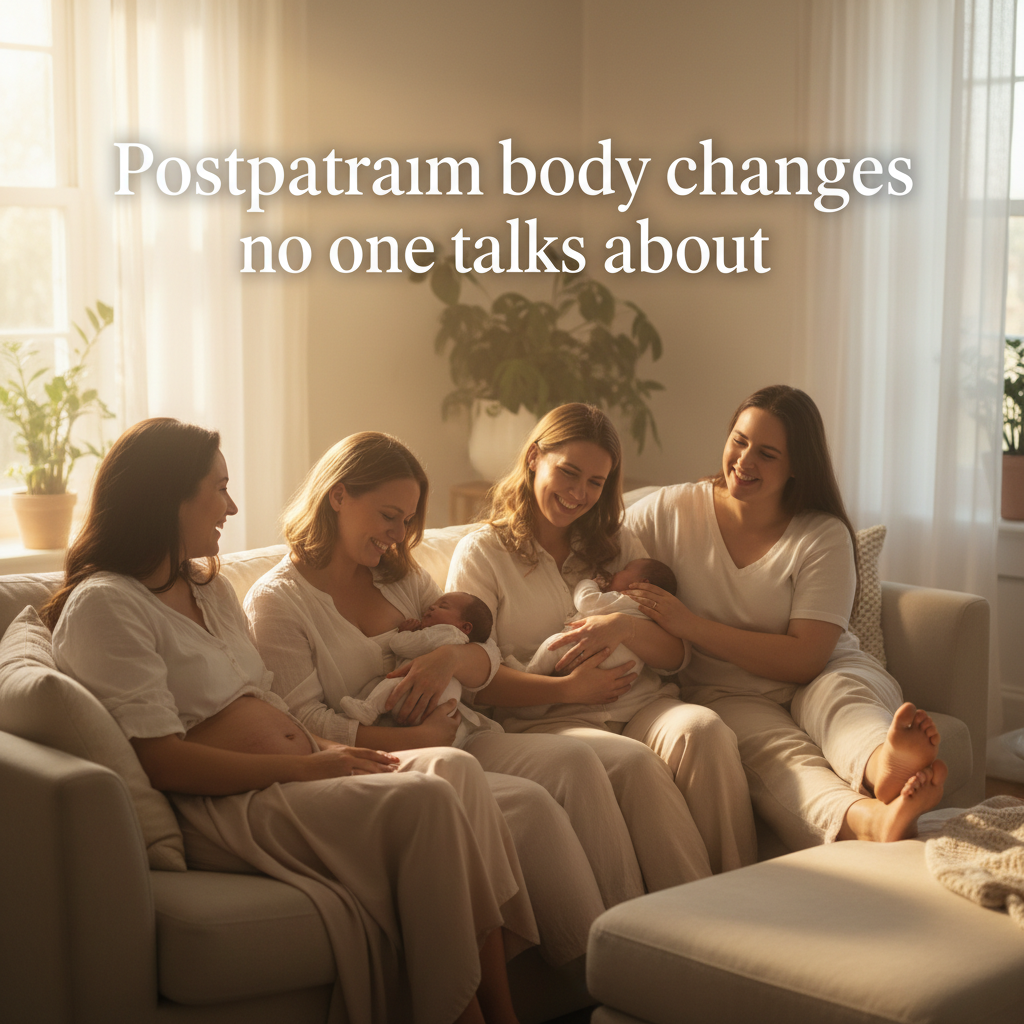
What are the most common physical changes after giving birth that no one talks about?
After childbirth, many women experience physical changes that are rarely discussed, including:
- Weak pelvic floor muscles
- Hair loss
- Night sweats
- Breast changes
- Vaginal dryness
- Changes in body odor
- Loose or sagging skin
- Abdominal muscle separation (diastasis recti)
- Hemorrhoids (piles)
- Joint pain
- Mood changes
- Bladder control issues
Every postpartum recovery is different. Some women recover within a few weeks, while others continue to notice changes for several months or even a year.
Why does the body change so much after pregnancy?
Pregnancy affects nearly every system in the body. Hormonal changes, increased blood volume, weight gain, muscle stretching, and childbirth all contribute to postpartum recovery.
After delivery:
- Hormone levels drop rapidly.
- The uterus gradually shrinks back to its normal size.
- Internal organs return to their usual position.
- Muscles and connective tissues begin healing.
Many of these changes continue well beyond the traditional six-week postpartum checkup.
Is it normal that my stomach still looks pregnant?
Yes. It is completely normal for your abdomen to remain rounded for weeks or even months after giving birth.
Common reasons include:
- The uterus is still shrinking.
- Abdominal muscles have stretched.
- Loose skin remains.
- Pregnancy fat stores are still present.
Recovery takes time, and every woman’s body heals differently.
What is abdominal separation after pregnancy?
Abdominal separation, also called diastasis recti, occurs when the left and right abdominal muscles separate during pregnancy.
Common symptoms include:
- A bulge down the center of the abdomen
- Weak core muscles
- Lower back pain
- Difficulty lifting heavy objects
Targeted postpartum exercises and physical therapy often help improve this condition.
Why am I losing so much hair after pregnancy?
Postpartum hair loss surprises many new mothers.
During pregnancy, high estrogen levels keep hair in the growth phase. After childbirth, estrogen levels fall, causing more hair than usual to shed.
Typically:
- Hair loss begins about 2 to 4 months after delivery.
- Hair growth usually returns to normal within 6 to 12 months.
Is it normal to sweat a lot after giving birth?
Yes.
Many women experience intense night sweats during the first few weeks after delivery because the body is:
- Eliminating excess pregnancy fluids
- Adjusting hormone levels
- Returning to its normal balance
Drinking plenty of water and wearing breathable clothing can help manage the discomfort.
What happens to my breasts after pregnancy?
Breasts often change significantly after pregnancy and breastfeeding.
Common changes include:
- Larger or smaller size
- Softer texture
- Different shape
- More visible veins
- Reduced fullness after breastfeeding
These changes are influenced by hormones, milk production, genetics, and aging.
Can childbirth affect bladder control?
Yes.
Temporary urine leakage is common after pregnancy and childbirth, especially when you:
- Sneeze
- Laugh
- Cough
- Exercise
Pregnancy and vaginal birth can weaken the pelvic floor muscles. Pelvic floor exercises, such as Kegels, often improve bladder control over time.
Why does sex feel different after having a baby?
Several postpartum changes can affect intimacy.
These include:
- Vaginal dryness
- Scar tissue from childbirth
- Hormonal changes
- Weak pelvic floor muscles
- Fatigue
- Emotional adjustments
Many women notice gradual improvement over the following months as their bodies recover.
Is vaginal dryness normal even if I am not breastfeeding?
Yes.
After childbirth, estrogen levels remain lower than usual, reducing natural lubrication.
Breastfeeding keeps estrogen levels low for longer, which can extend vaginal dryness.
Helpful strategies include:
- Using lubricants
- Staying well hydrated
- Speaking with a healthcare provider if symptoms persist
Why do my hips seem wider after pregnancy?
Many women notice lasting changes in hip width.
During pregnancy, the hormone relaxin loosens the pelvic ligaments to prepare for childbirth.
While some changes reverse, pelvic alignment and body composition may remain slightly different after pregnancy.
Why is postpartum back pain so common?
Back pain after childbirth is extremely common.
Possible causes include:
- Carrying your baby frequently
- Weak abdominal muscles
- Hormonal changes
- Poor posture while feeding
- Sleep deprivation
Improving posture and gradually strengthening the core can help reduce discomfort.
Why do my joints still hurt after pregnancy?
Joint pain can continue for several months after childbirth.
Possible reasons include:
- Lingering effects of relaxin
- Weak muscles
- Returning to exercise
- Lack of sleep
- Repetitive baby-care movements
Gentle exercise, stretching, and proper body mechanics often improve symptoms.
Why do I have stronger body odor after pregnancy?
Some mothers notice increased body odor after childbirth.
Hormonal changes increase sweating, especially under the arms.
Some researchers believe this stronger scent may help newborns recognize their mothers.
The odor usually decreases as hormone levels stabilize.
Is it normal to have mood swings after having a baby?
Yes.
Physical recovery and emotional recovery happen together.
Many women experience:
- Mood swings
- Anxiety
- Irritability
- Crying spells
- Feeling overwhelmed
The “baby blues” are common during the first two weeks after delivery. However, persistent or severe symptoms may indicate postpartum depression and should be evaluated by a healthcare professional.
How long does postpartum healing really take?
Recovery varies from one woman to another.
Typical healing timelines include:
- Uterus: about 6 weeks
- Hormonal balance: several months
- Pelvic floor recovery: 6 months to 1 year
- Core strength recovery: several months
- Hair regrowth: 6 to 12 months
Complete recovery often takes much longer than many people expect.
Can I exercise immediately after giving birth?
Light movement, such as walking, is usually encouraged.
Returning to exercise depends on:
- Type of delivery
- Overall health
- Medical advice
- Recovery progress
Rebuilding strength gradually is safer than returning to intense workouts too quickly.
Will my body ever go back to the way it was before pregnancy?
Not always.
Many women regain much of their strength and fitness, but some physical changes may be permanent, including:
- Stretch marks
- Breast changes
- Wider hips
- Scar tissue
- Reduced skin elasticity
These changes reflect the remarkable work your body performed during pregnancy and childbirth.
When should I see a doctor about postpartum body changes?
Seek medical care if you experience:
- Heavy bleeding that suddenly worsens
- Severe pelvic pain
- Fever
- Difficulty urinating
- Continuous urine leakage
- Severe depression or anxiety
- Pain that continues to worsen
- Signs of infection
- Difficulty walking
Early medical treatment often leads to faster recovery.
What helps with postpartum recovery?
Healthy recovery usually includes:
- Eating nutritious foods
- Staying hydrated
- Getting as much rest as possible
- Accepting help from family and friends
- Gentle movement
- Pelvic floor exercises
- Regular postpartum checkups
- Being patient with your body’s healing process
Recovery is not a race. Every woman’s healing journey is unique.
Voice Search Questions Everyone Asks
What is the most surprising postpartum body change?
Many mothers are surprised by postpartum hair loss, pelvic floor weakness, night sweats, and abdominal muscle separation because these changes are discussed less often before childbirth.
How long does postpartum hair loss last?
Postpartum hair loss is usually temporary and typically improves within 6 to 12 months after delivery.
Why do I still look pregnant months after giving birth?
Your uterus, abdominal muscles, loose skin, and body fat all need time to recover. It may take several months before your abdomen feels closer to its pre-pregnancy shape.
How long does it take the body to recover after childbirth?
While some recovery occurs within six weeks, complete physical healing commonly takes six months to a year or longer.
Is postpartum bladder leakage normal?
Yes. Temporary urine leakage is common after pregnancy and childbirth because the pelvic floor muscles become stretched and weakened.
Conclusion
Understanding Your Postpartum Recovery
The postpartum journey involves far more than caring for a newborn. Your body is recovering from one of the most significant physical events it will ever experience. Hair loss, pelvic floor weakness, joint pain, abdominal separation, emotional changes, and many other postpartum symptoms are common—even though they are not often discussed.
Understanding these changes helps set realistic expectations, reduces unnecessary worry, and reminds new mothers that healing takes time. Every postpartum experience is unique. If something feels unusual or symptoms become severe, consult your healthcare provider. With proper care, patience, support, and time, your body can recover while you embrace this new chapter of motherhood.
Also Read:-
Countries with the best maternity leave policies
Rise, Lead, Thrive: Your Guide to Success & Leadership
The Voice of Women Who Mean Business: Leadership & Success